Cutting vacancy downtime means shrinking the gap between one tenant leaving and the next paying rent, starting 18 months before a lease ends. Landlords do it by pricing to the market, preparing the space for likely tenants, and reaching tenants who are actively looking. Every month saved is a month of rent recovered.
What downtime actually costs
A vacant unit costs more than its lost rent. You also carry the taxes, insurance and CAM the tenant used to pay, plus utilities and security for an empty space. Add the allowance, free rent and commissions needed to land the next tenant, and a long vacancy can wipe out years of rent growth on that unit.
The market sets the pressure. In Q2 2026, CBRE put U.S. retail availability at 4.9%, while national office vacancy stood at 20.1% according to Cushman & Wakefield. A retail landlord can often refill a good unit quickly. An office landlord competing against one in five vacant square feet has to work harder for every tenant.
Seven plays to shorten the gap
Play 1: Start before the notice arrives
Track every lease expiration 18 months out. Talk to tenants at 12 to 15 months about renewal. A tenant who'll stay is your cheapest deal. A tenant who'll leave tells you early, and that gives you a year to find a replacement instead of three months.
Play 2: Price to the tenants in the market, not to the last lease
An asking rent set above the market adds months, and a few months of vacancy usually costs more than a small rent cut. Look at what comparable space has actually leased for recently, not asking rents. If your space sits for 90 days with no serious tours, the price is the likeliest problem.
Play 3: Make the space easy to picture
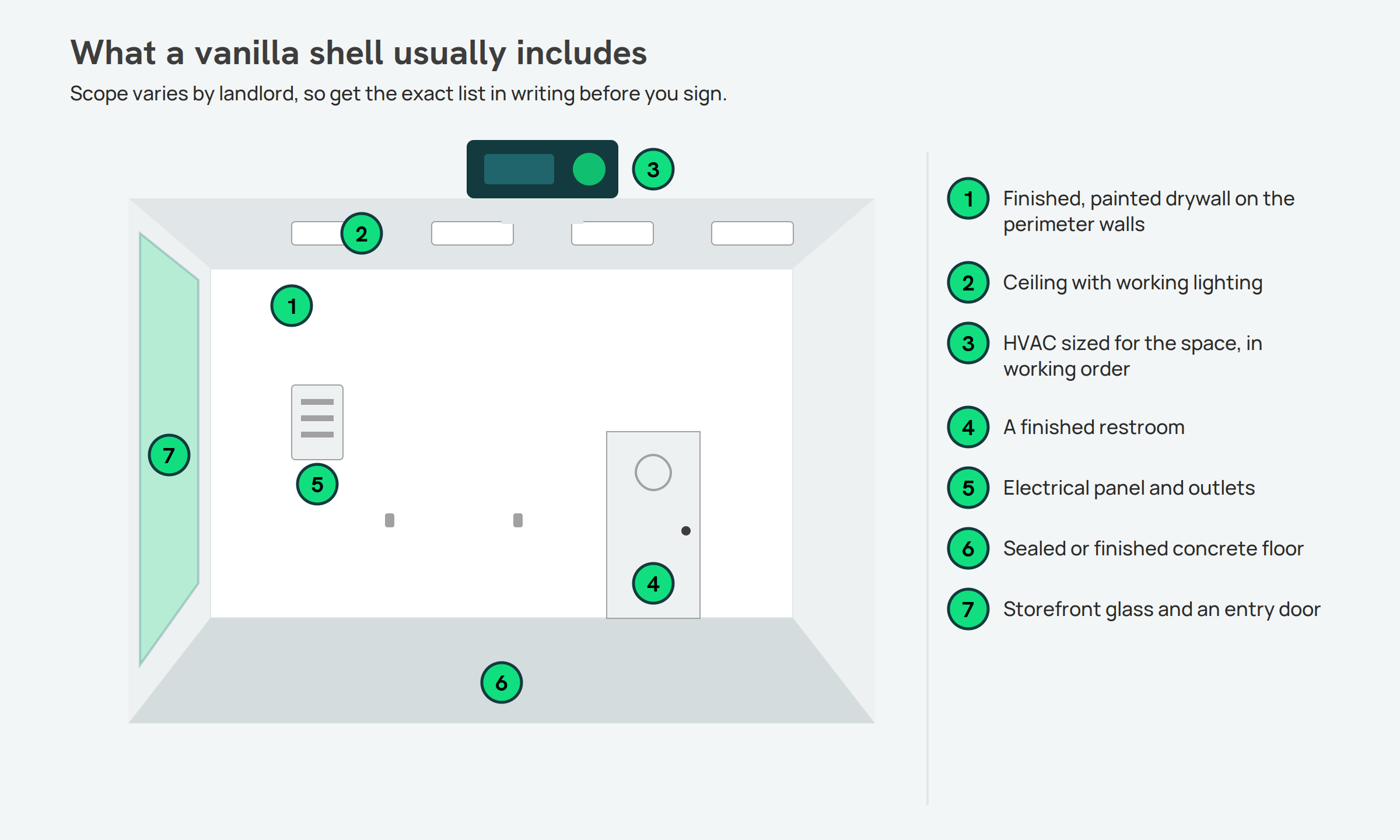
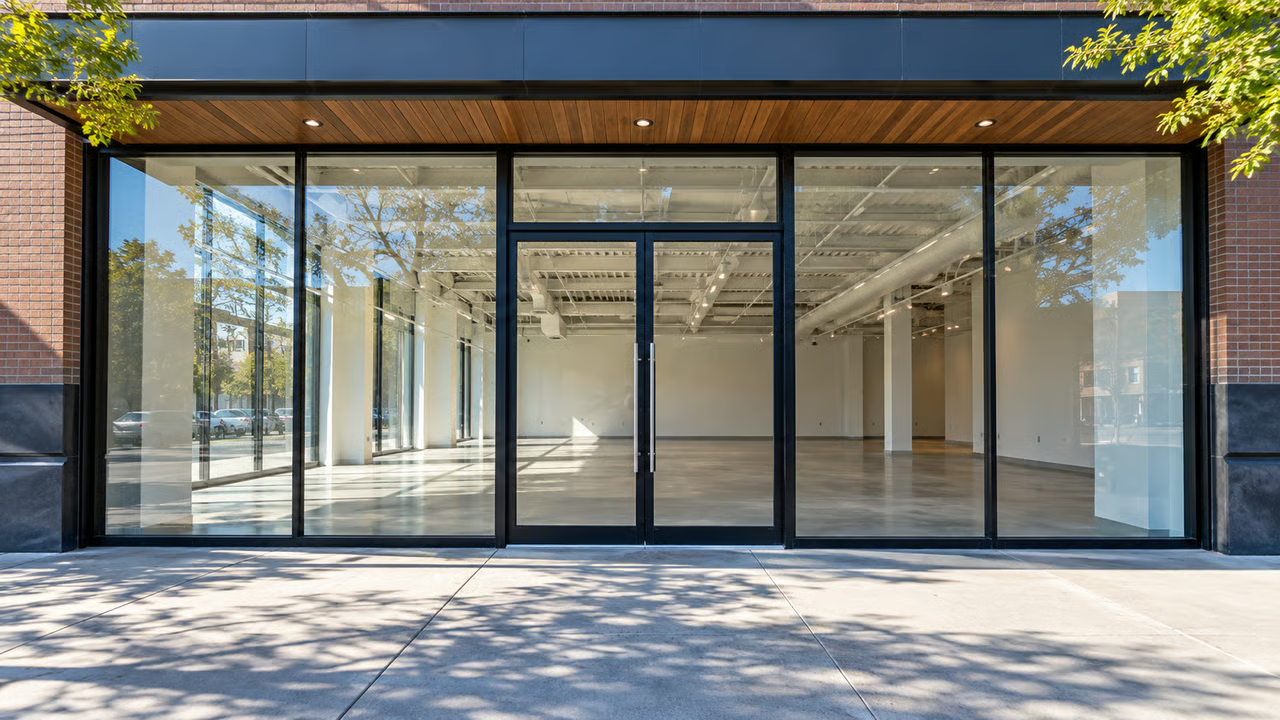
Tenants struggle to see past a former tenant's leftovers. Strip out custom fixtures, patch and paint, and bring it to a clean "vanilla shell." The diagram above shows what that usually includes. Photograph it once it's done, because good photos are the first tour most tenants take. A space that's ready to show reaches a decision faster. Budget for it as part of leasing cost, not as an extra.
Play 4: Keep second-generation value when it fits
The opposite also works. A former restaurant with a grease trap, hood and walk-in cooler is worth more to the next restaurant than a blank shell. Before you demolish, check whether demand exists for the same use. Our QSR site selection checklist shows what quick-service operators look for in a second-generation space.
Play 5: Reach active tenants, not just passive browsers
A listing sign and a website post reach tenants who happen to be looking at your street. Most tenants who'd take your space aren't browsing listings that week. They've told a broker what they need, or they're quietly planning an expansion. Find the requirements that already exist and bring your space to them.
Brokers are the other half of this. Send a short, complete package to tenant rep brokers who work your property type: floor plan, photos, asking terms, allowance range and the date the space is available. A broker can only pitch what they can explain in one email. Missing details push your space to the bottom of the list.
Play 6: Run the concessions math
Free rent, a bigger allowance and a lower rate all cost money, but in different ways. Free rent delays cash. An allowance costs cash up front. A lower rate costs you every year. For many owners, offering free rent rather than a lower rate protects the property's value, because the face rent stays intact. Our guide to tenant improvement allowances covers how allowances are structured.
Play 7: Screen fast, but screen
Speed matters, but a tenant who defaults in year two puts you back where you started, with legal costs added. Use a clear tenant scorecard so you can say yes or no in days, not weeks.
Which plays matter most
Our view: plays 1 and 5 do the most work. Starting early gives you time, and reaching active tenants gives you options. Pricing and presentation decide which tenant signs, but only after the right tenants know the space exists.
Put your space in front of live demand
Waltre shows landlords and brokers verified tenant requirements, so you can see who is looking for space like yours right now and respond directly. You can bring off-market space to a matching tenant without listing it publicly.
Start at 18 months. Price to the market. Go to the tenants.
Frequently Asked Questions
How long does it take to lease a vacant commercial space?
It varies widely by market, property type and condition. Well-priced, show-ready space in a tight market can lease in weeks, while office space in a high-vacancy market can sit far longer.
Should I lower the rent to fill a vacancy?
Often, a modest rent cut costs less than several more months of vacancy. Many owners prefer free rent over a lower face rate because it protects the property's valuation.
What is a vanilla shell?
A vanilla shell is a space delivered with basic finishes: finished walls, a ceiling, lighting, HVAC and restrooms, ready for a tenant's own build-out. It helps prospects picture their business in the space.
When should a landlord start marketing a space?
As early as possible. Track expirations 18 months out, discuss renewal at 12 to 15 months, and begin finding a replacement as soon as you know the tenant will leave.
Can I lease commercial space without listing it publicly?
Yes. Off-market leasing brings space directly to tenants with matching requirements, which helps when you want to avoid signaling a vacancy to other tenants, buyers or lenders.